Chapter 5: Sequential Baselines versus Nested and Simultaneous CCD
Distinguishing baselines from CCD formulations
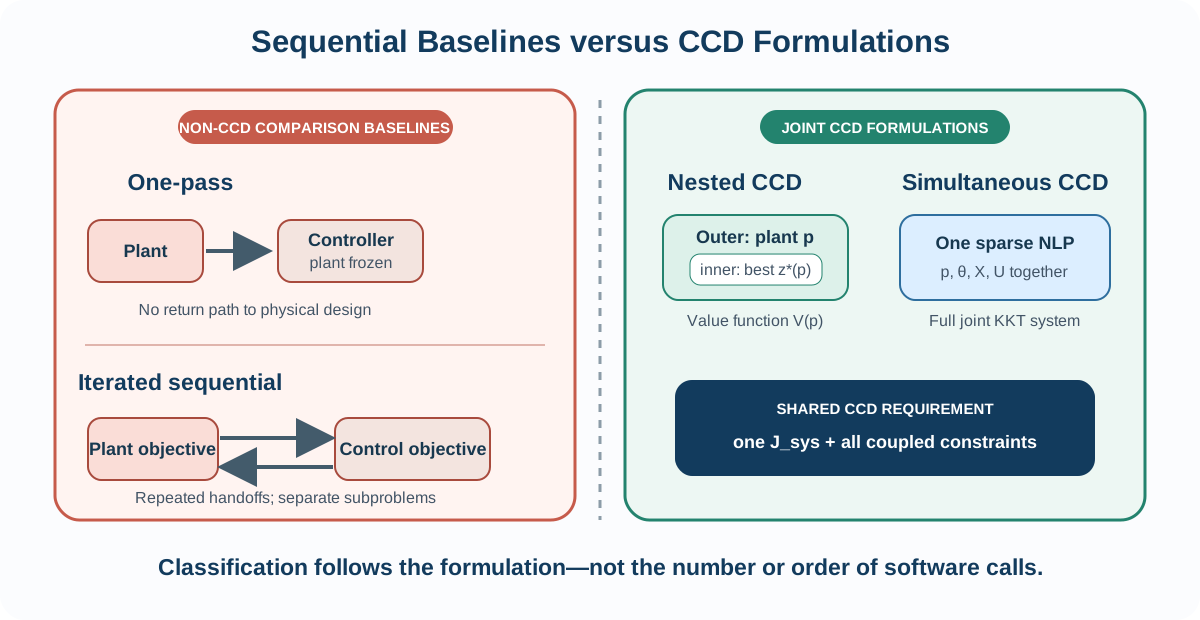
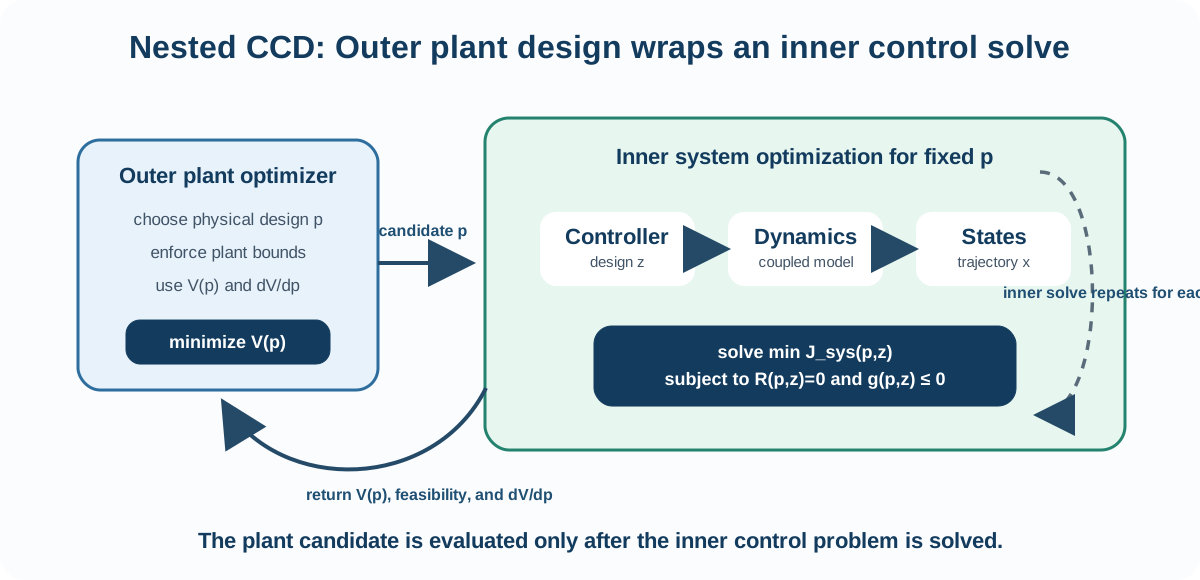
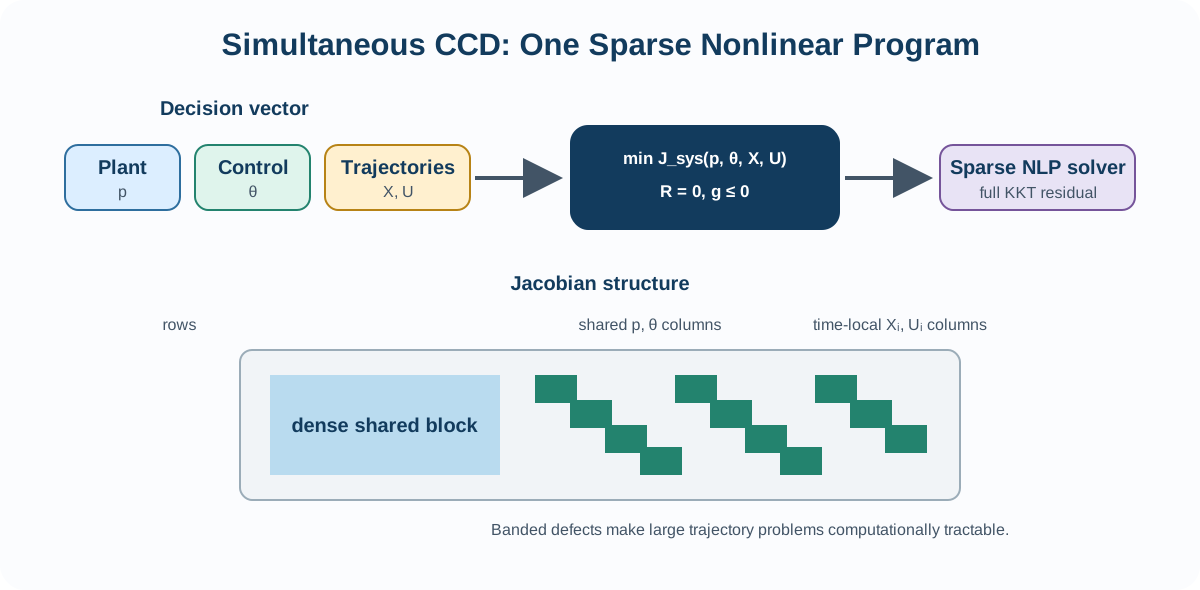
This chapter separates two ideas that are often blurred together. One-pass sequential design and the conventional iterated sequential workflow are comparison baselines, not control co-design formulations. They optimize plant and control disciplines through fixed handoffs or repeated discipline-specific updates. In contrast, nested CCD and simultaneous CCD optimize physical and control decisions with one system-level objective and one coupled set of constraints.
The distinction is defined by the optimization problem—not merely by the order in which software executes. A block-coordinate algorithm can solve a CCD problem if every block update belongs to the same joint formulation. The iterated sequential baseline studied here does not meet that condition because its plant and control subproblems retain separate objectives and incomplete coupling information.
Learning objectives
After completing this chapter, you should be able to:
formulate fair one-pass and iterated sequential baselines;
explain why repeated handoffs do not automatically constitute CCD;
derive nested and simultaneous formulations of the same joint CCD problem;
compare feasible regions, convergence tests, and computational cost; and
select a defensible baseline and CCD formulation for an engineering study.
Mathematical lens
Let denote physical design variables and let collect controller parameters, discretized states, and controls. The CCD problem is
where contains the discretized dynamics. Nested and simultaneous CCD are two ways to solve this joint problem. The sequential baselines solve restricted or discipline-specific problems instead.
Running example
The running example is an active suspension with physical variables and control decisions . Every comparison uses the same road input, state equations, comfort metric, actuator limits, suspension-travel limit, tire-load limit, mesh, and validation model. This prevents an apparent CCD benefit from being caused by unequal assumptions.
Chapter map
One-Pass Sequential Baseline
Iterated Sequential Baseline
Nested CCD
Simultaneous or All-at-Once CCD
Shared Formulation and Practical Differences
Feasible-Region Differences
Computational Cost
Convergence Behavior
Selecting a Baseline and CCD Formulation
Hybrid CCD Solution Workflows