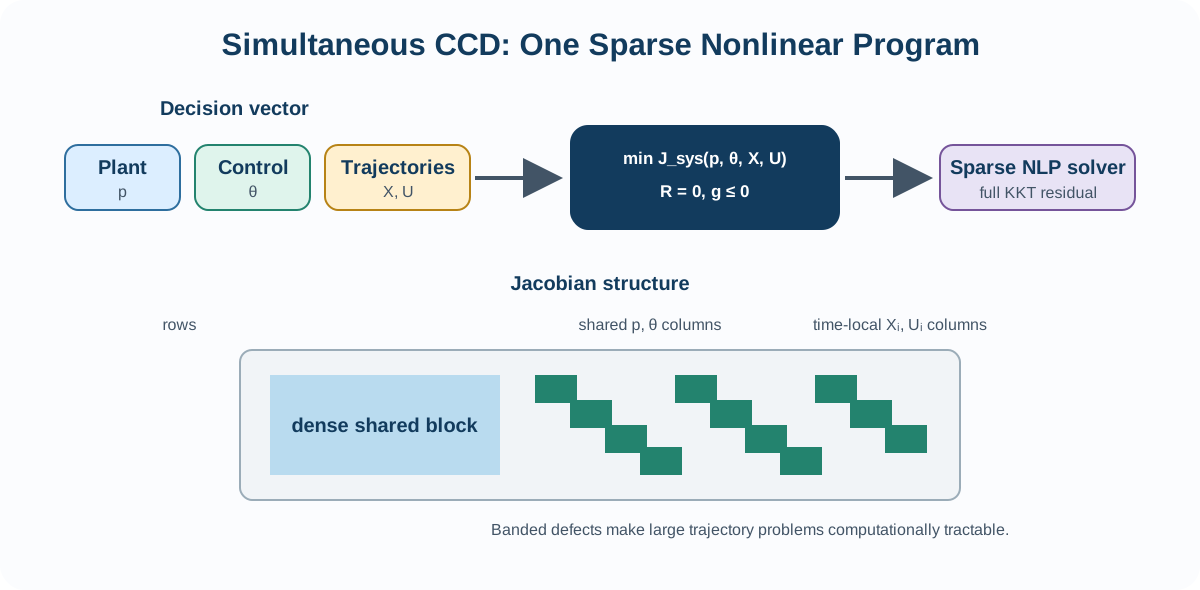
After direct transcription, Ri=0 are dynamic defects. The nonlinear program is large but sparse because each defect depends mainly on neighboring time nodes and the shared design variables.
There is no inner control optimizer. Plant and control decisions move together according to the KKT system of the joint problem. This can improve derivative consistency and remove inner-solve noise, but it requires careful scaling, sparse derivatives, feasible initialization, and mesh verification.
Simultaneous CCD and nested CCD may represent the same mathematical problem. Their numerical behavior, memory use, initialization sensitivity, and derivative implementation can nevertheless differ substantially.
Activity 5.4: size and verify a simultaneous CCD problem