1.1 Conventional Sequential Engineering Design
The familiar handoff
Many organizations divide a dynamic-system project into a chain of discipline-specific tasks:
requirements are allocated;
mechanical, electrical, hydraulic, or thermal hardware is designed;
actuators and sensors are selected;
the physical design is frozen;
a model is handed to the controls team; and
the controller is tuned to recover as much system performance as possible.
This workflow is understandable. It aligns with departmental boundaries, supplier contracts, design reviews, and established simulation tools. It also reduces coordination: each team sees a smaller problem with fewer variables.
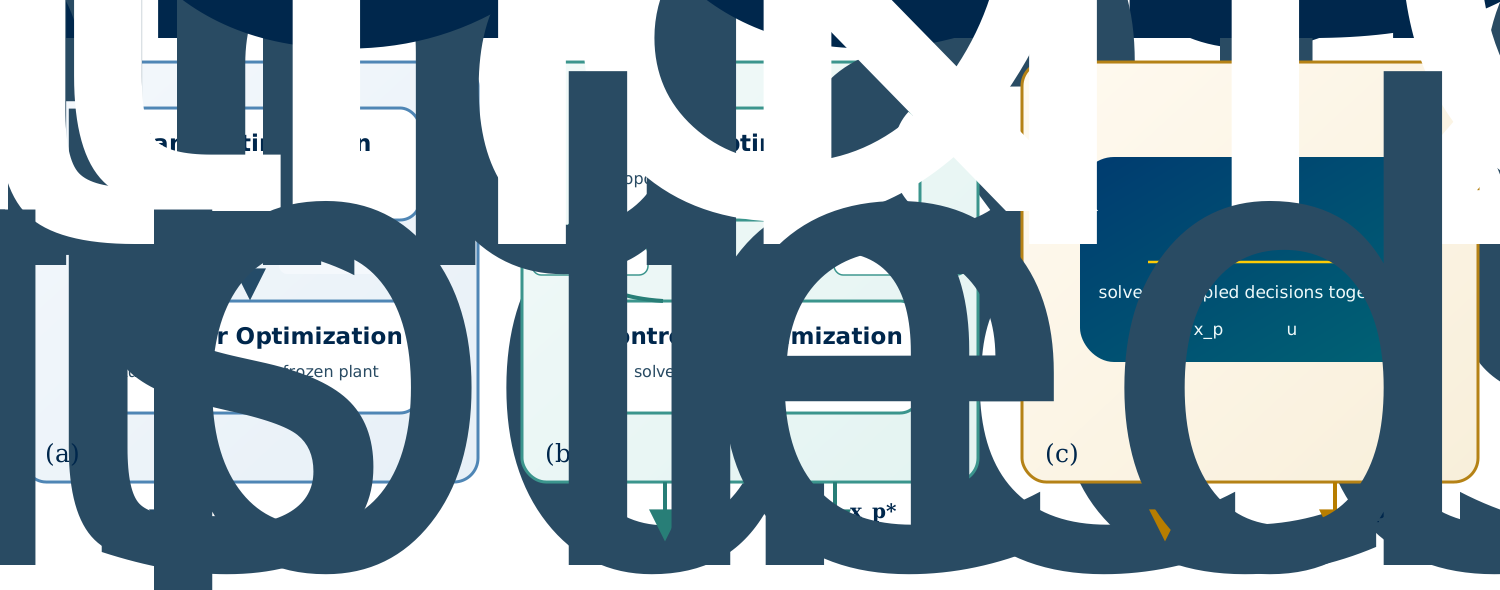
The simplification, however, comes from an assumption that is rarely tested: physical design can be completed before the consequences for feedback are known.
The quarter-car handoff
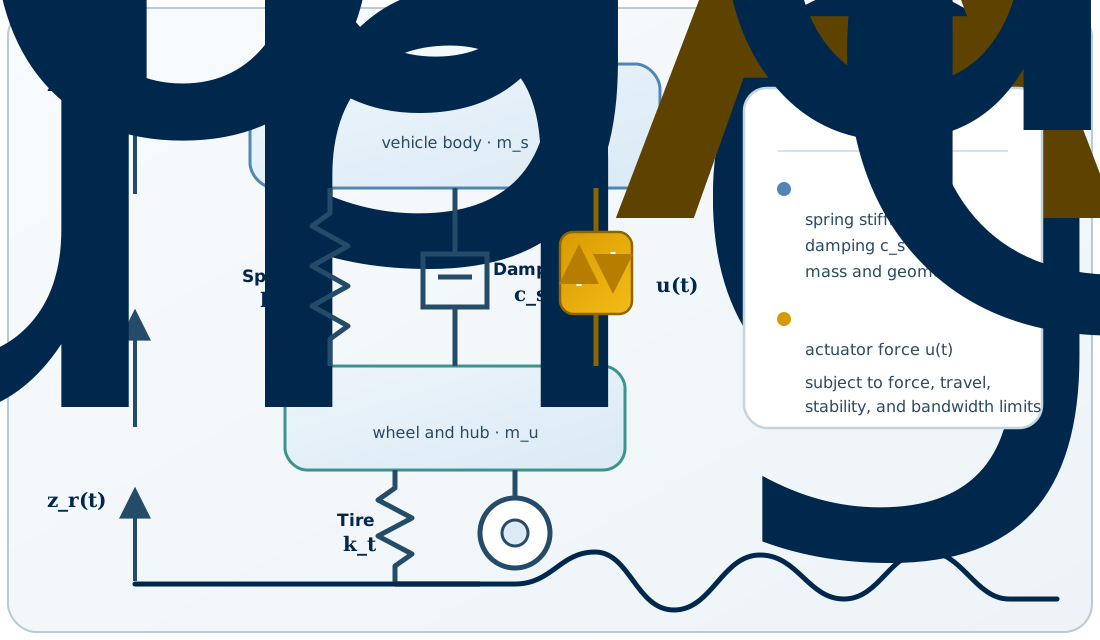
Let . With positive actuator force acting upward on the sprung mass and downward on the unsprung mass, the dynamics are
The passive plant-design problem sets ; the subsequent control problem computes for the already selected values of and .
For the suspension, a sequential plant team might choose and by minimizing a passive metric
subject to packaging and stress limits. After those values are frozen, the controls team tunes gains to minimize
subject to actuator force, suspension travel, stability, and bandwidth constraints. The vertical bar matters: the controller is optimized conditional on a plant selected for another problem.
The plant team may have made the spring soft to improve passive comfort. The controller then needs more actuator stroke or low-frequency force to regulate body motion. Alternatively, a stiff plant may protect suspension travel while moving the controlled system toward uncomfortable accelerations. Neither team has authority to revisit both sides of the trade.
Sequential design is not automatically poor engineering
Sequential design can be effective when interfaces are genuinely weak, a mature platform must be reused, certification freezes the plant, or a standard controller already offers ample margin. Its weakness is not the ordering alone. Its weakness is prematurely removing decisions that strongly affect the system-level optimum.
Hidden assumptions in a handoff
A sequential process often embeds assumptions without stating them:
the selected actuator can deliver the required force, rate, and bandwidth;
the chosen sensors reveal the states needed for feedback;
the plant model remains valid over the controller’s operating range;
control effort has negligible effects on mass, heat, energy, and cost;
saturation and delay will not reshape the preferred physical design; and
failure or degraded-control modes remain acceptable.
CCD begins by turning these assumptions into variables, constraints, and testable hypotheses.