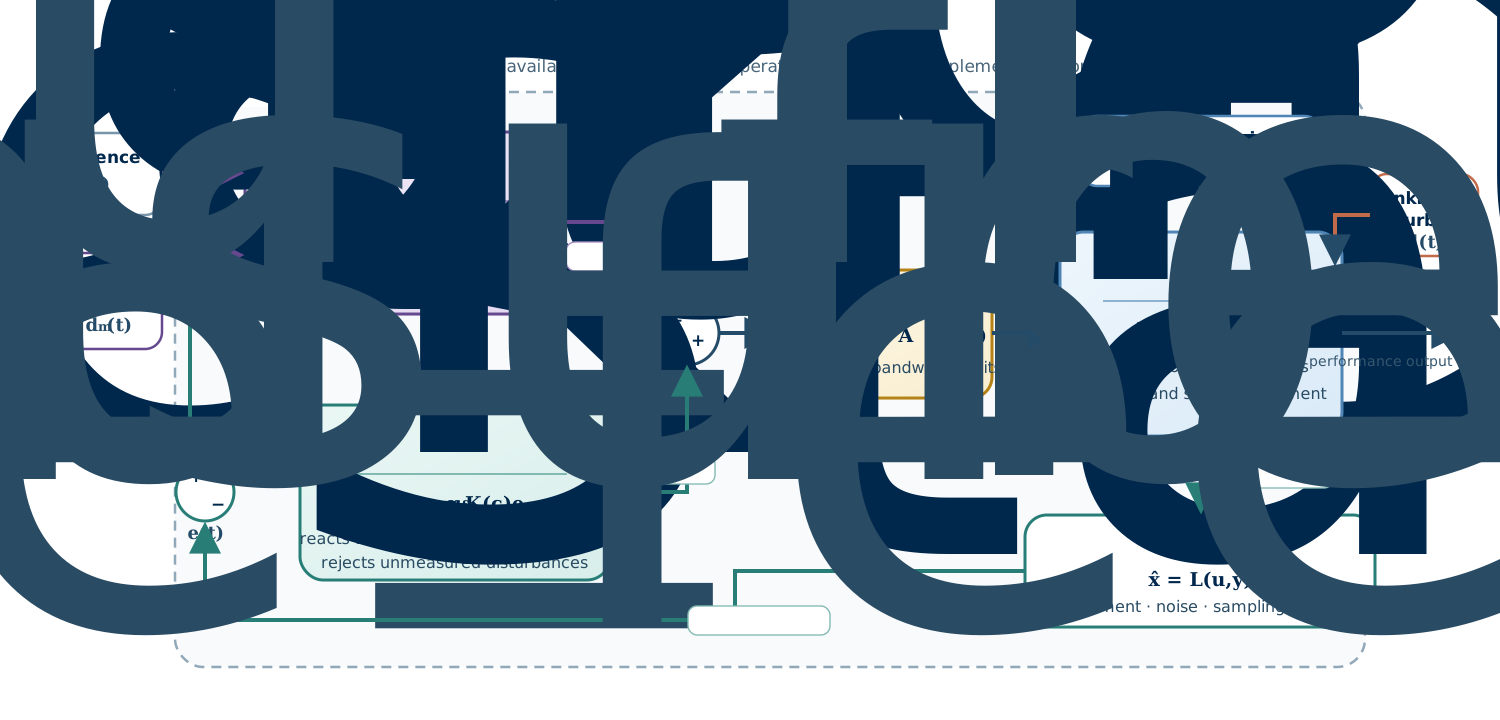
Feedback computes a command from measured or estimated behavior,
u(t)=κ(rc(t),x^(t),y(t),c),
where rc is a reference and c contains controller parameters. Feedback can reject unmeasured disturbances, stabilize unstable plants, reduce sensitivity to parameter error, and enforce desired dynamics. It acts only after information about the disturbance or resulting error becomes available.
Feedforward uses a reference or measured disturbance directly,
u(t)=uff(rc,dm,p)+ufb(x^,rc,c).
It can cancel predictable effects without waiting for error, but its quality depends on model accuracy and information. Road preview, wind preview, commanded robot trajectories, and known payload changes can support feedforward action.
An open-loop optimal trajectory often assumes the entire disturbance is known. A realizable feedback controller may know only current measurements. A preview controller lies between these cases. Because information changes achievable performance, each assumption can favor a different plant.
For the suspension, road preview allows the actuator to prepare for an upcoming bump. Without preview, the controller reacts after body or wheel motion begins. More preview may justify softer passive elements or a smaller actuator; limited sensing may favor a more forgiving passive design.
Separating feedforward and feedback clarifies design responsibilities. Feedforward shapes nominal reference tracking; feedback supplies robustness and disturbance rejection. CCD should evaluate both nominal performance and sensitivity to modeling error. An architecture with excellent feedforward tracking but weak feedback robustness may be undesirable.
PID, state feedback, output feedback, gain scheduling, robust control, and MPC expose different parameters and information requirements. A fair CCD comparison must hold physical design freedom and requirements constant while acknowledging that controller classes have different implementation costs.