Chapter 15: Canonical Tutorial: Active Vehicle Suspension
A complete CCD problem from equations to implementation
The active suspension is compact enough to reproduce yet rich enough to expose plant design, control authority, geometry, dynamic constraints, information, uncertainty, and coordination.
Learning objectives
After completing this chapter, you should be able to:
explain and apply vehicle model;
explain and apply road and metrics;
explain and apply plant and actuator;
explain and apply coordination methods;
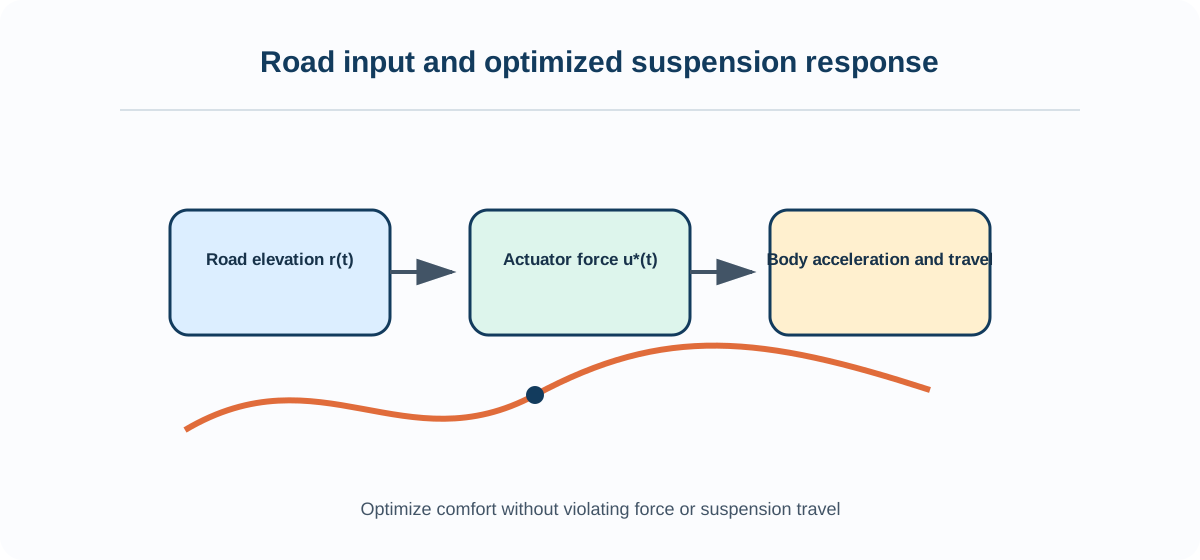
formulate and verify the chapter methods on a quarter-car and trailing-arm suspension progressed from baseline to simultaneous, nested, MPC, and robust design.
Mathematical lens
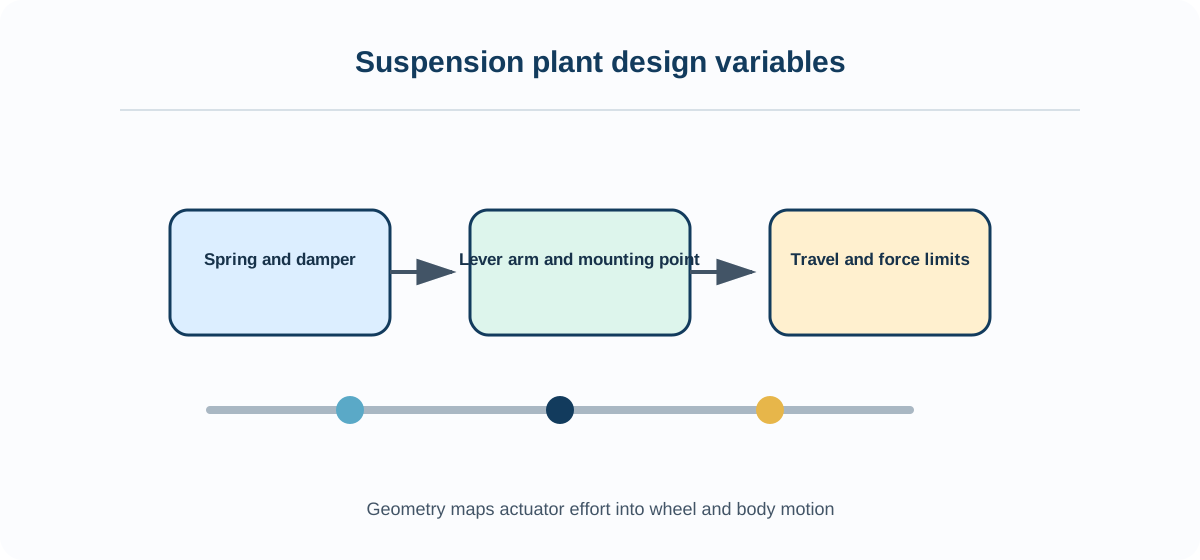
The recurring quantities are vehicle states, spring and damper, actuator, geometry, control, road input, and preview horizon:
Running example
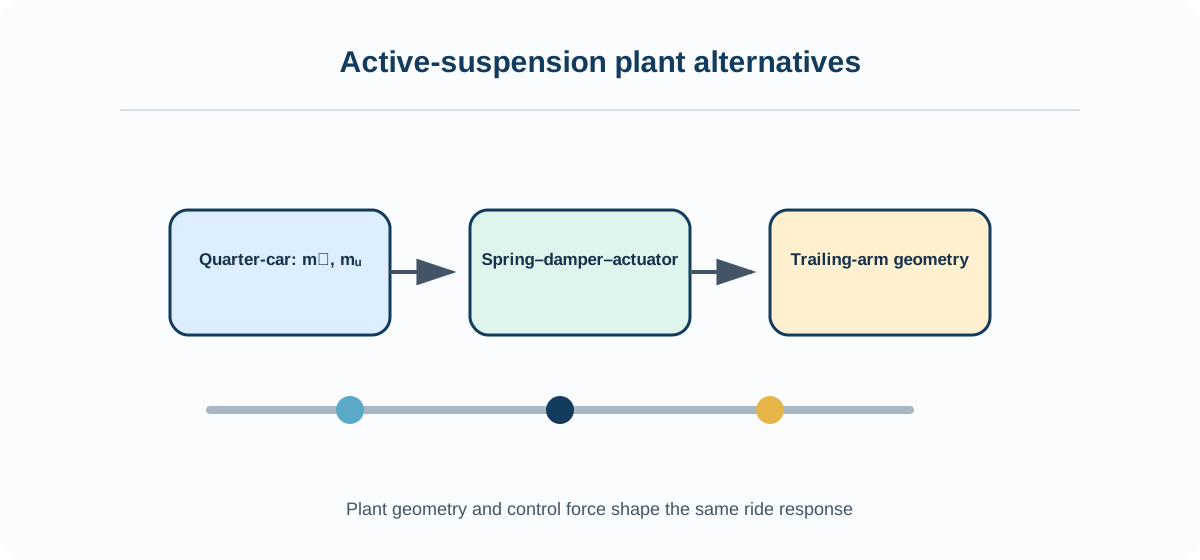
The recurring example is a quarter-car and trailing-arm suspension progressed from baseline to simultaneous, nested, MPC, and robust design. Retaining one system prevents apparent improvements from being caused by changed physics, information, loads, or metrics.
Recommended workflow
derive model.
build baseline.
solve CCD.
restrict information.
validate robust design.
Chapter map
Quarter-Car and Trailing-Arm Models
Road Disturbance Models
Ride Comfort and Suspension-Travel Metrics
Spring and Damper Design
Actuator and Control Constraints
Sequential Baseline
Simultaneous CCD
Nested CCD
OLOC and Closed-Loop CCD
MPC and Information Horizons
Uncertainty Studies
Interpretation of the Optimized Design