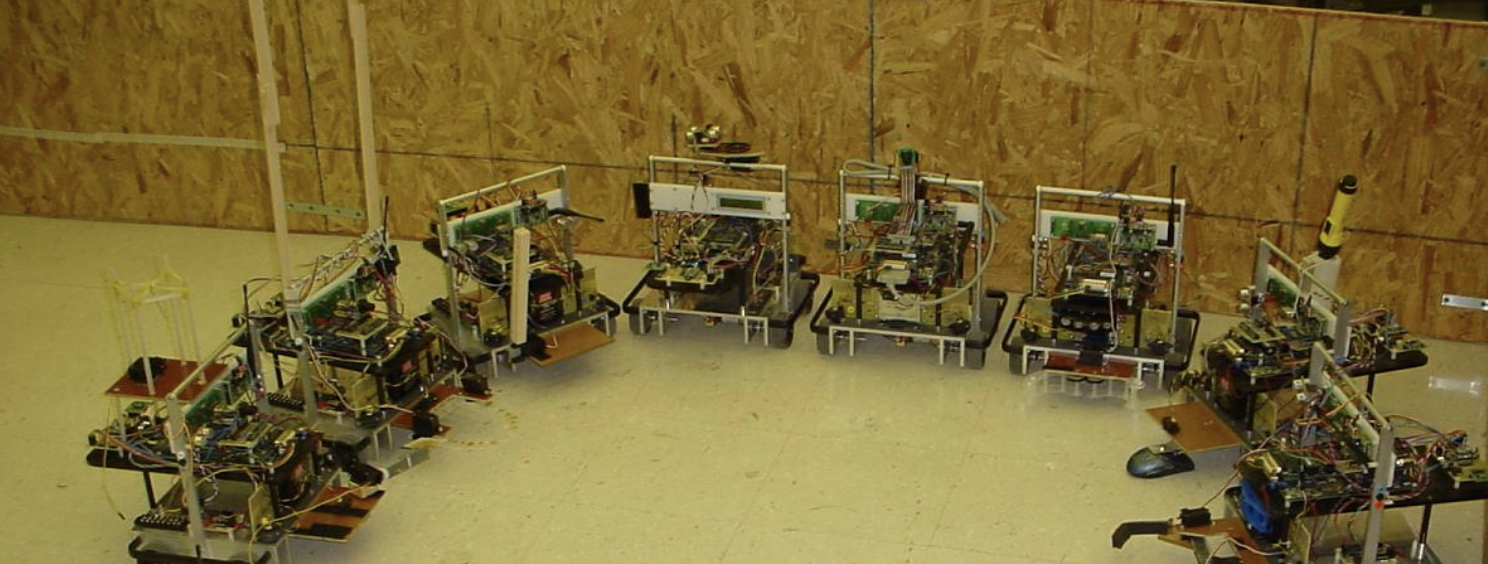
Introduction to Mechatronics (SE 423) – Co-Instructor
Undergraduate course, University of Illinois Urbana–Champaign, Industrial & Enterprise Systems Engineering, 2024
Role
Served as one of two co-instructors for SE 423 – Introduction to Mechatronics, an undergraduate course that integrates embedded programming, sensing, actuation, and feedback control through lectures, structured labs, and a semester-long mobile robotics project. The course focuses on microcontroller-based implementation using the TI LaunchXL-F28379D board, real-time C programming, and system-level mechatronic design.
Responsibilities
- Co-designed and delivered lecture content on topics such as digital I/O, ADC/DAC, PWM motor control, timers and interrupts, serial communication (UART, SPI, I²C), sensors (IR, LIDAR, IMU, rate gyros, encoders), filtering, and path-planning algorithms.
- Led lab sessions focused on hardware/software integration, including motor control, sensor interfacing, signal processing, and real-time implementation in Code Composer Studio and LabVIEW.
- Guided student teams through a semester project in which they built and programmed autonomous mobile robots, emphasizing incremental milestones, debugging strategies, and system integration.
- Evaluated homework, lab check-offs, LabVIEW assignments, and final project demonstrations, with attention to both technical correctness and evidence of sustained effort over the semester.
- Held office hours and project help sessions to support students with embedded C programming, control implementation, and troubleshooting of hardware issues.
Topics and Skills Emphasized
- Embedded C programming on TI microcontrollers and real-time interrupt-based control.
- Sensor integration and calibration (optical encoders, IR sensors, gyros, IMUs, LIDAR, cameras) and basic sensor fusion and Kalman filtering. =
- PWM motor control, H-bridge circuits, and closed-loop speed and position control.
- Signal processing for mechatronics applications, including filtering and FFT-based analysis.
- Robot navigation concepts such as dead-reckoning, bug algorithms, and A* path planning.
- Team-based design, documentation, and technical communication through project reports and demonstrations.