Chapter 16: Wind Turbine Control Co-Design
Rotor, structure, platform, and controller as one system
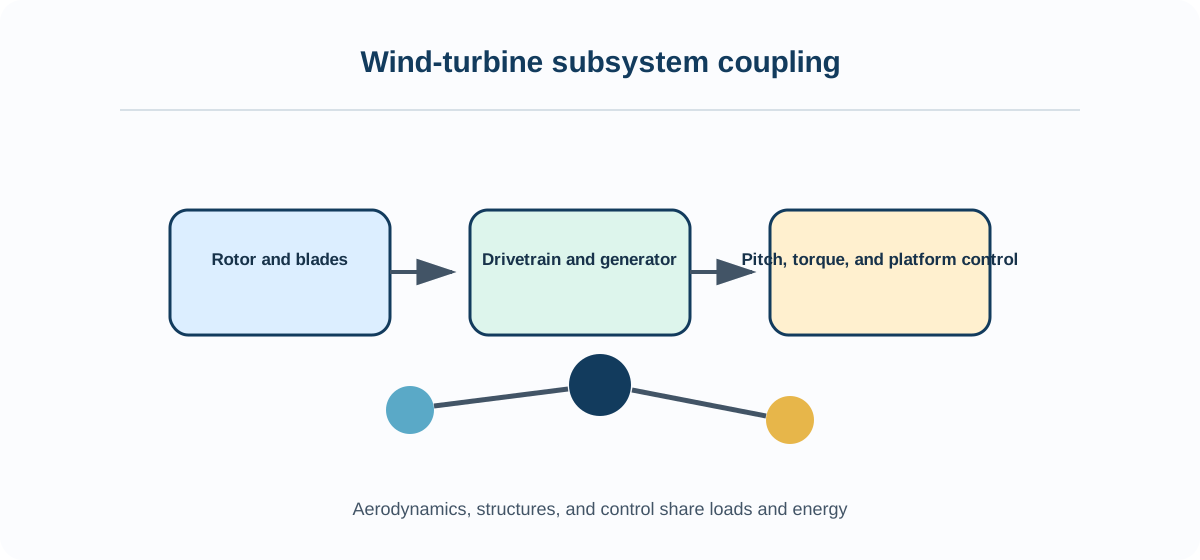
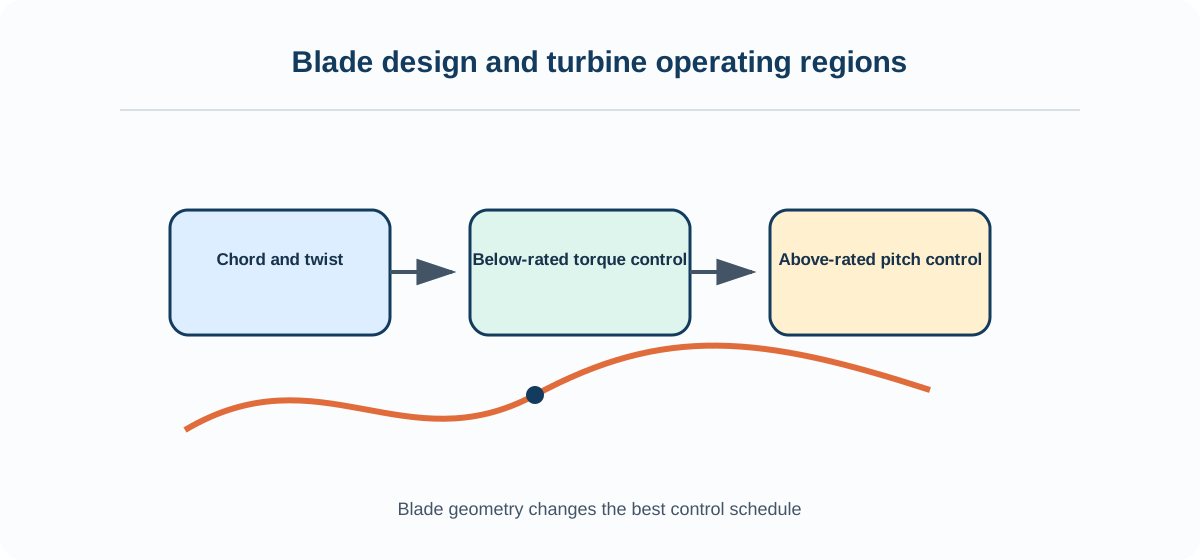
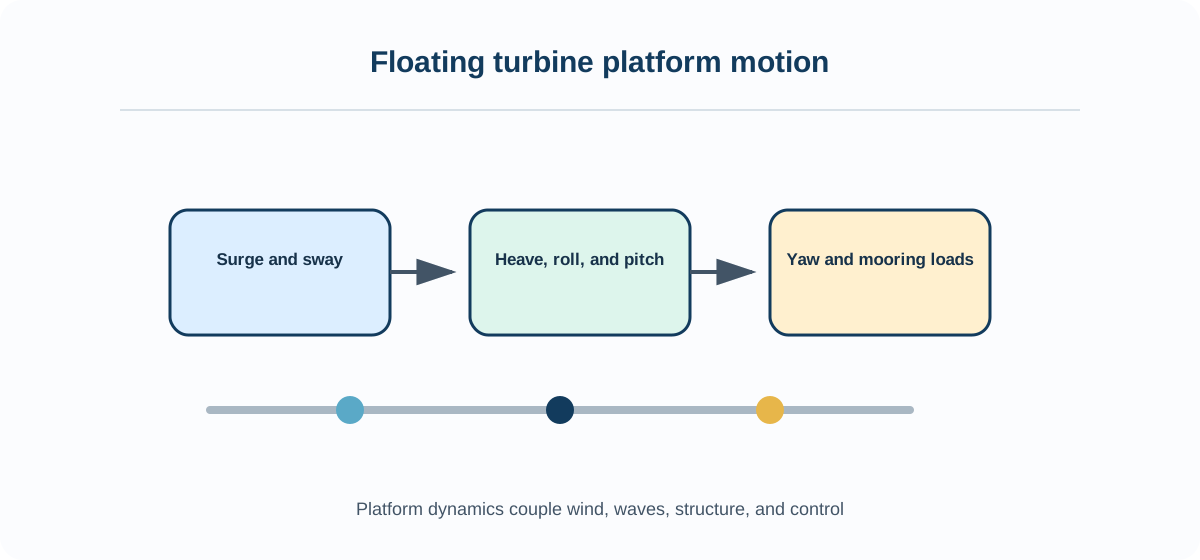
Wind CCD coordinates aerodynamic capture, structural loads, platform motion, generator and pitch control, operating regions, reliability, and economics.
Learning objectives
After completing this chapter, you should be able to:
explain and apply rotor aerodynamics;
explain and apply structure and platform;
explain and apply torque and pitch control;
explain and apply load cases;
formulate and verify the chapter methods on fixed-bottom and floating turbines evaluated over design load cases.
Mathematical lens
The recurring quantities are blade, tower, platform, generator, controller, loads, AEP, and LCOE:
Running example
The recurring example is fixed-bottom and floating turbines evaluated over design load cases. Retaining one system prevents apparent improvements from being caused by changed physics, information, loads, or metrics.
Recommended workflow
parameterize turbine.
build coupled model.
evaluate load cases.
optimize plant and control.
validate multi fidelity.
Chapter map
Wind-Turbine Subsystems and Operating Regions
Rotor Aerodynamics and Blade Geometry
Tower and Support-Structure Dynamics
Generator Torque and Blade-Pitch Control
Floating-Platform Dynamics
Design Load Cases and Fatigue
AEP, Structural Cost, and LCOE
Nested and Simultaneous Wind CCD
OLOC, MPC, and Conventional Closed-Loop Control
Surrogate and Multi-Fidelity Modeling
Fixed-Bottom and Floating Examples
Wind-Farm and Supervisory Control Considerations