Chapter 11: Solving Nested and Simultaneous CCD Problems
Derivatives, sparsity, scaling, and computational efficiency
Many reported CCD failures are implementation failures: inaccurate derivatives, poor scaling, inconsistent inner convergence, insufficient discretization, hidden nonsmoothness, or unfair comparisons.
Learning objectives
After completing this chapter, you should be able to:
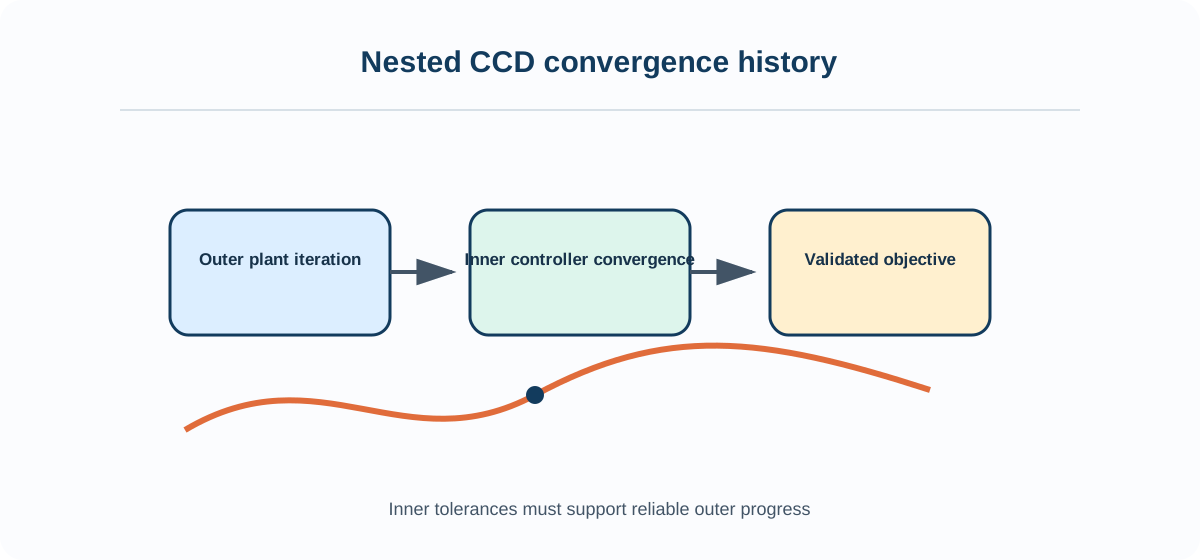
explain and apply outer plant loop;
explain and apply inner control solve;
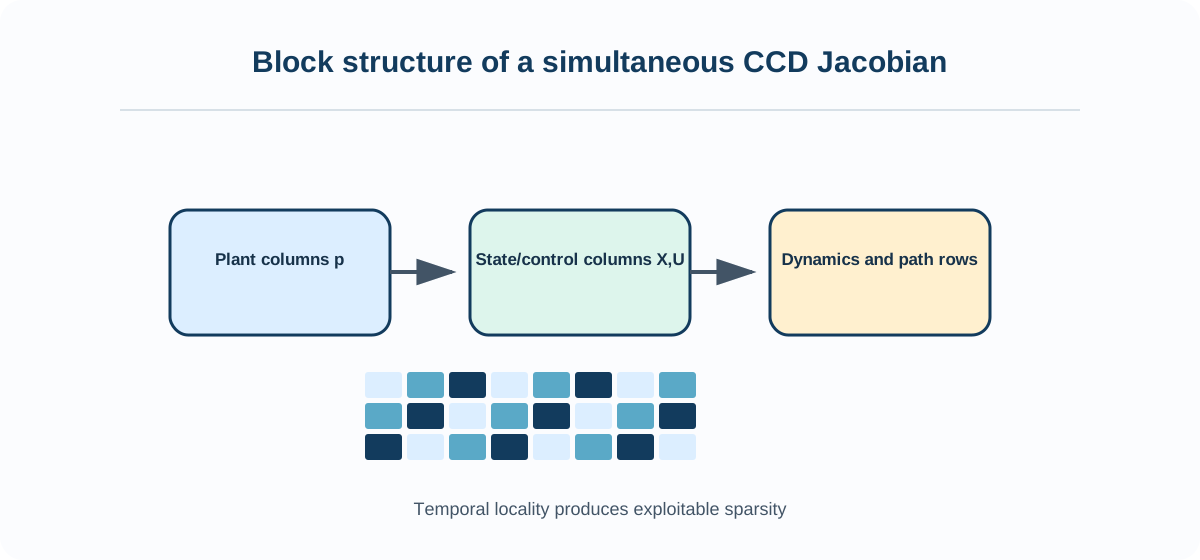
explain and apply sparse simultaneous NLP;
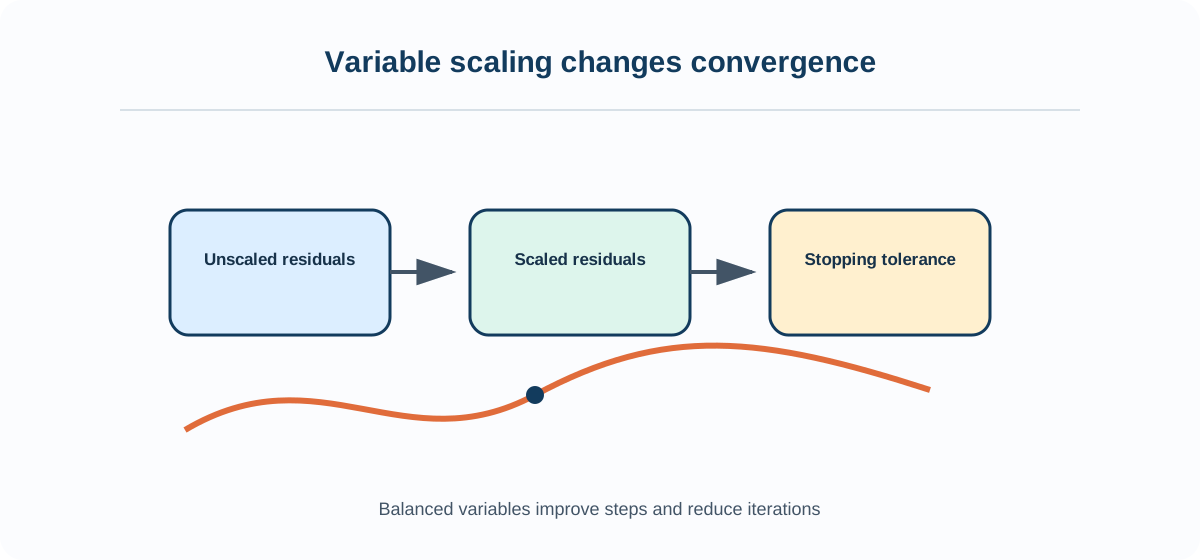
explain and apply derivatives and scaling;
formulate and verify the chapter methods on nested and simultaneous suspension formulations using identical meshes, derivatives, tolerances, and starts.
Mathematical lens
The recurring quantities are outer , trajectory , and sparse residuals :
Running example
The recurring example is nested and simultaneous suspension formulations using identical meshes, derivatives, tolerances, and starts. Retaining one system prevents apparent improvements from being caused by changed physics, information, loads, or metrics.
Recommended workflow
scale formulation.
verify derivatives.
warm start.
match tolerances.
compare solutions.
Chapter map
Structure of the Nested Problem
Structure of the Simultaneous Problem
Gradient-Based Algorithms
Finite Differences and Complex-Step Derivatives
Algorithmic Differentiation
Direct and Adjoint Sensitivities
Sparse Jacobians and Hessians
Variable and Constraint Scaling
Initialization and Warm Starting
Parallel Computation
Local Versus Global Optimization
Bilevel Sensitivities and Inner-Loop Convergence