Chapter 20: Reproducible CCD and Future Directions
Building a common discipline rather than isolated case studies
CCD will mature through common benchmarks, explicit reporting, reusable interfaces, differentiable tools, physically grounded learning, experimental evidence, and system-level research questions.
Learning objectives
After completing this chapter, you should be able to:
explain and apply benchmarks and reports;
explain and apply model–solver interfaces;
explain and apply differentiable physics and learning;
explain and apply system synthesis;
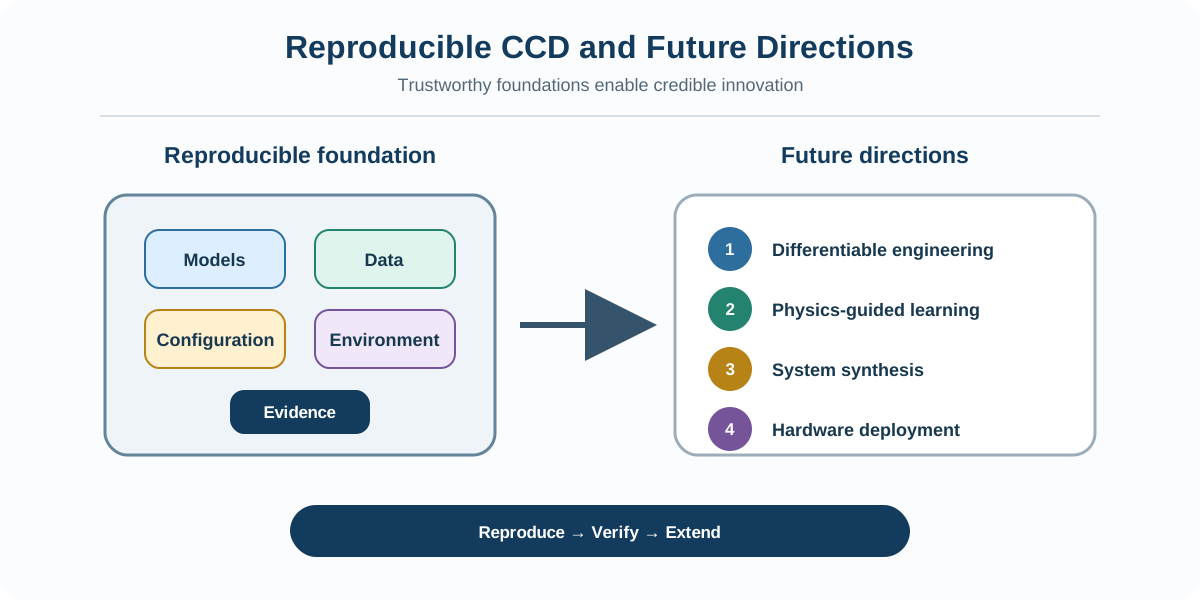
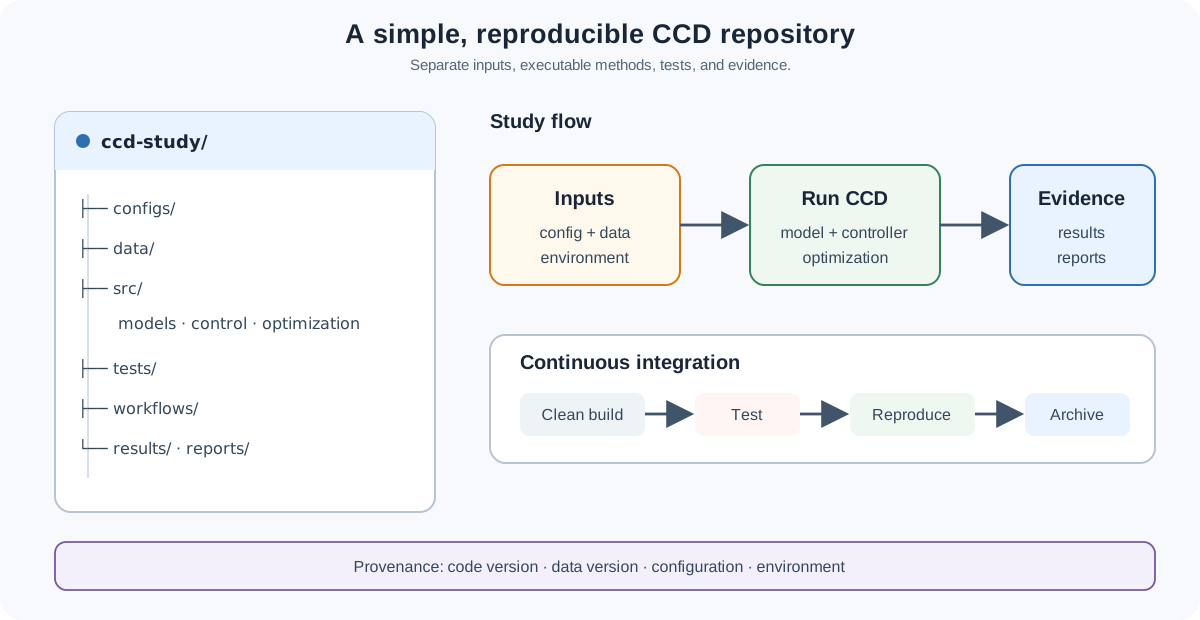
formulate and verify the chapter methods on a reproducible repository with versioned models, data, formulations, solvers, tests, results, and hardware evidence.
Mathematical lens
The recurring quantities are interfaces, design and trajectory data, derivatives, metadata, seeds, tolerances, and provenance:
Running example
The recurring example is a reproducible repository with versioned models, data, formulations, solvers, tests, results, and hardware evidence. Retaining one system prevents apparent improvements from being caused by changed physics, information, loads, or metrics.
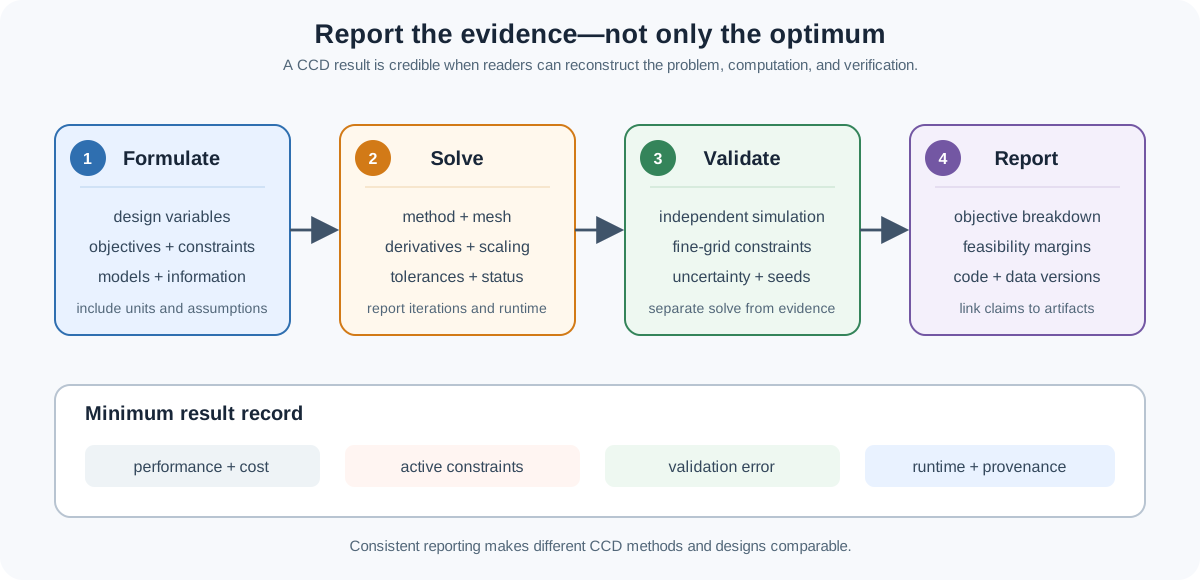
Recommended workflow
define benchmark.
publish interfaces.
capture environment.
reproduce evidence.
extend frontier.
Chapter map
Benchmark Problems
Standard Reporting Practices
Open-Source Software Organization
Reusable Model and Optimization Interfaces
Automatic Differentiation and Differentiable Simulation
Physics-Informed Learning
Reinforcement Learning Within CCD
System-Level Synthesis and Information Architecture
Distributed and Networked CCD
Human-in-the-Loop CCD
Digital Engineering and Model-Based Systems Engineering
Research Roadmap