Chapter 19: From Mathematical Optimum to Working Hardware
Verification, controller realization, and experimental validation
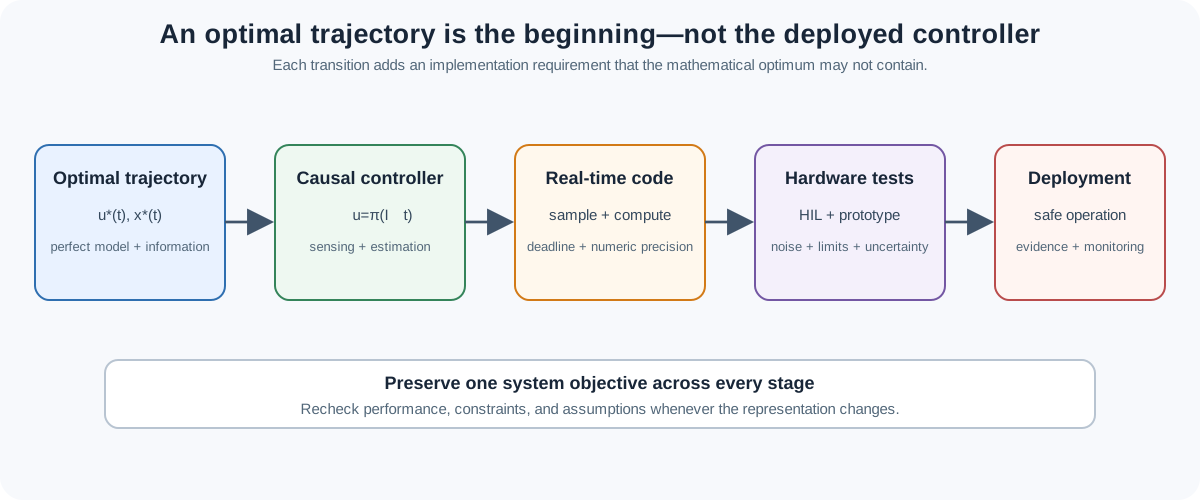
A mathematical optimum creates value only after causal realization, executable software, timing verification, hardware constraints, experiments, model updating, and safety evidence.
Learning objectives
After completing this chapter, you should be able to:
explain and apply optimal trajectory;
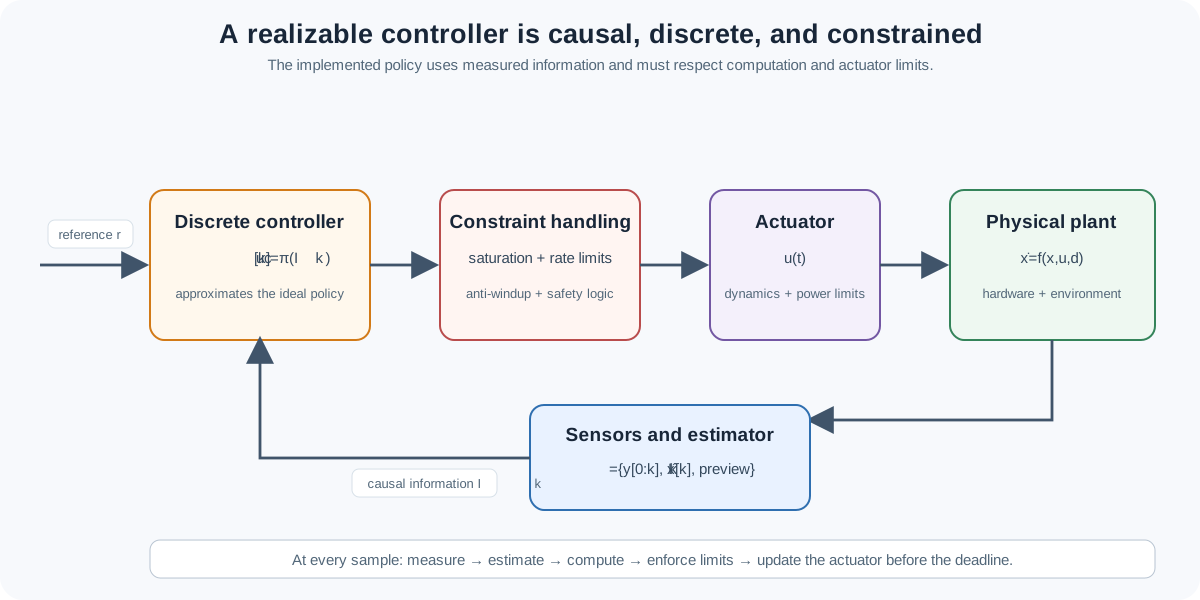
explain and apply causal controller;
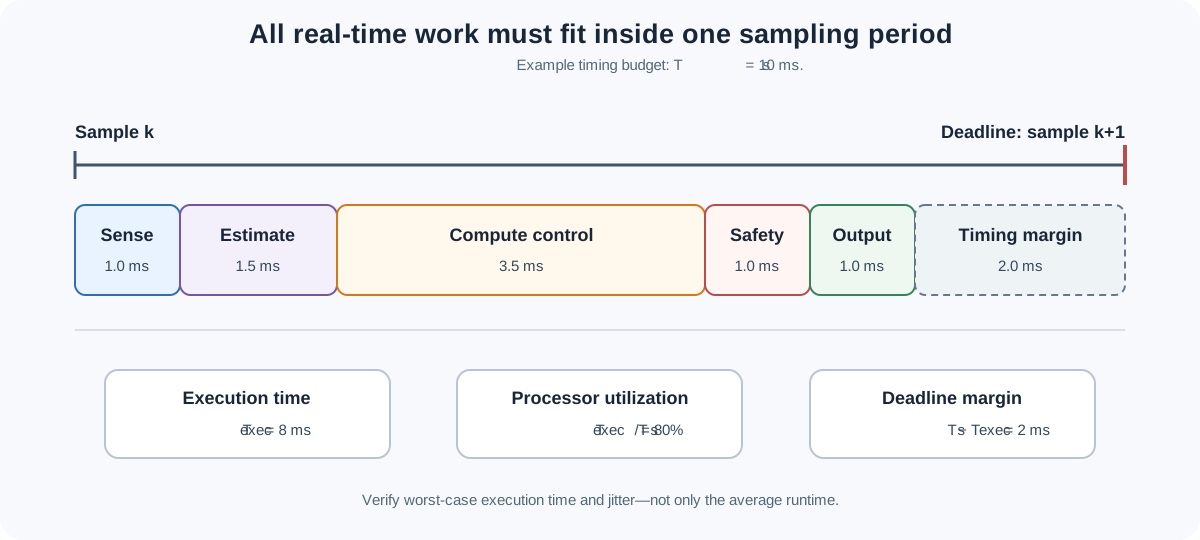
explain and apply real-time software;
explain and apply HIL and prototype;
formulate and verify the chapter methods on an active-suspension rig progressing from ideal torque to estimator-based real-time control and HIL.
Mathematical lens
The recurring quantities are ideal , policy , sampling, latency, quantization, estimator, hardware, and validation residuals:
Running example
The recurring example is an active-suspension rig progressing from ideal torque to estimator-based real-time control and HIL. Retaining one system prevents apparent improvements from being caused by changed physics, information, loads, or metrics.
Recommended workflow
realize controller.
generate code.
test models.
close hardware loop.
update and certify.
Chapter map
Why Optimized Trajectories Are Not Sufficient
Controller Approximation and Realization
Discretization and Real-Time Implementation
State Estimation
Actuator and Sensor Selection
Software-in-the-Loop
Model-in-the-Loop
Processor-in-the-Loop
Hardware-in-the-Loop
Prototype Testing
Model Updating and Digital Twins
Safety, Certification, and Deployment Constraints