Chapter 9: Multiobjective, Economic, and Lifecycle CCD
Designing for value rather than a single performance number
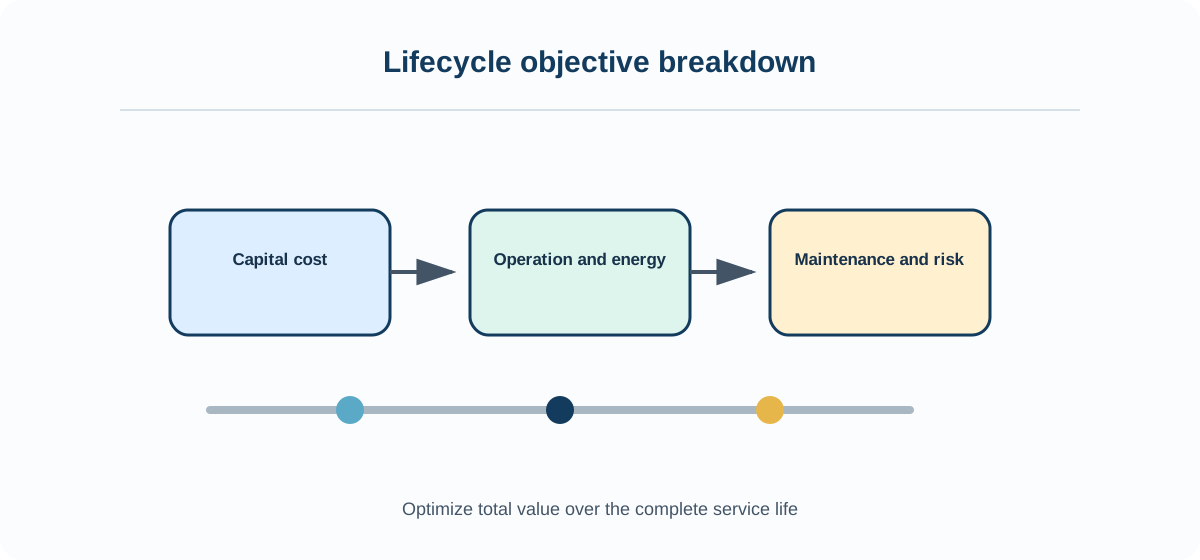
Lifecycle CCD expands system value beyond one response metric to capital cost, operation, reliability, maintenance, environmental impact, and multiple operating conditions.
Learning objectives
After completing this chapter, you should be able to:
explain and apply energy production;
explain and apply loads and fatigue;
explain and apply capital cost;
explain and apply operations;
formulate and verify the chapter methods on a wind turbine balancing AEP, structural mass, fatigue, control effort, capital cost, and LCOE.
Mathematical lens
The recurring quantities are plant and controller design, scenarios , and objective vector :
Running example
The recurring example is a wind turbine balancing AEP, structural mass, fatigue, control effort, capital cost, and LCOE. Retaining one system prevents apparent improvements from being caused by changed physics, information, loads, or metrics.
Recommended workflow
define stakeholder metrics.
scale objectives.
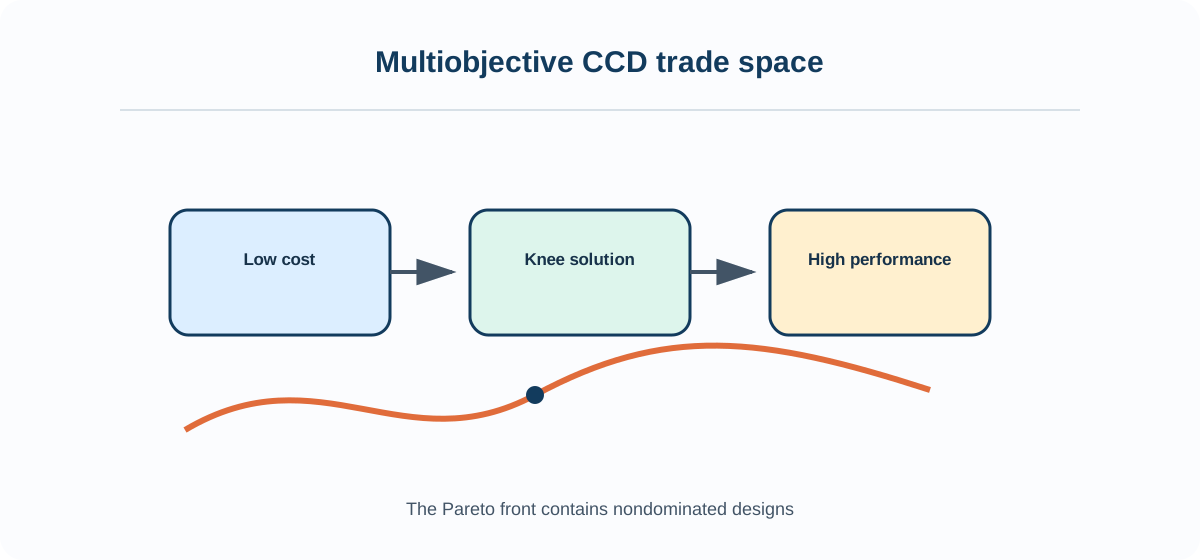
generate Pareto set.
validate scenarios.
select robust candidate.
Chapter map
Multiple Conflicting Objectives
Weighted-Sum and Epsilon-Constraint Methods
Pareto Optimality
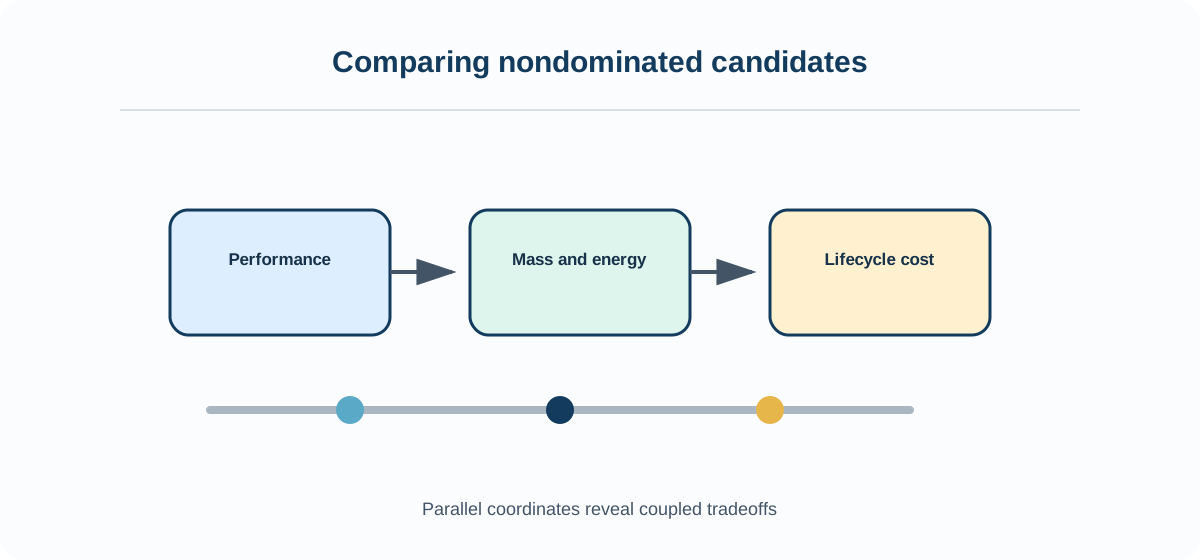
Performance, Mass, Energy, and Cost
Reliability and Maintenance
Manufacturability
Environmental and Lifecycle Metrics
Economic Objectives Such as LCOE
Design for Multiple Operating Conditions
Selecting a Final Design from a Pareto Set