Chapter 17: Marine and Hybrid Renewable-Energy Systems
Geometry, power take-off, mooring, storage, and control
Marine-energy CCD spans hydrodynamic geometry, PTO, generators, mooring, arrays, storage, supervisory control, reliability, and site conditions.
Learning objectives
After completing this chapter, you should be able to:
explain and apply resource and hydrodynamics;
explain and apply geometry and PTO;
explain and apply generator and mooring;
explain and apply array and hybrid system;
formulate and verify the chapter methods on a point absorber extended to a floating wind–wave–hydrogen system.
Mathematical lens
The recurring quantities are geometry, hydrodynamics, PTO, generator, mooring, array, storage, and control:
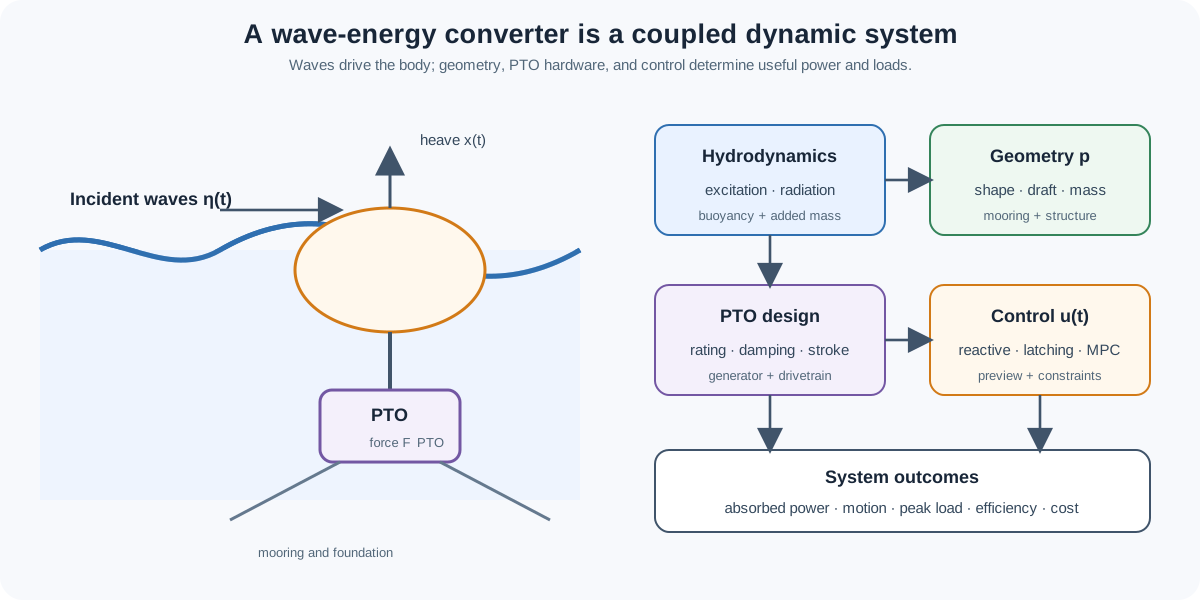
Running example
The recurring example is a point absorber extended to a floating wind–wave–hydrogen system. Retaining one system prevents apparent improvements from being caused by changed physics, information, loads, or metrics.
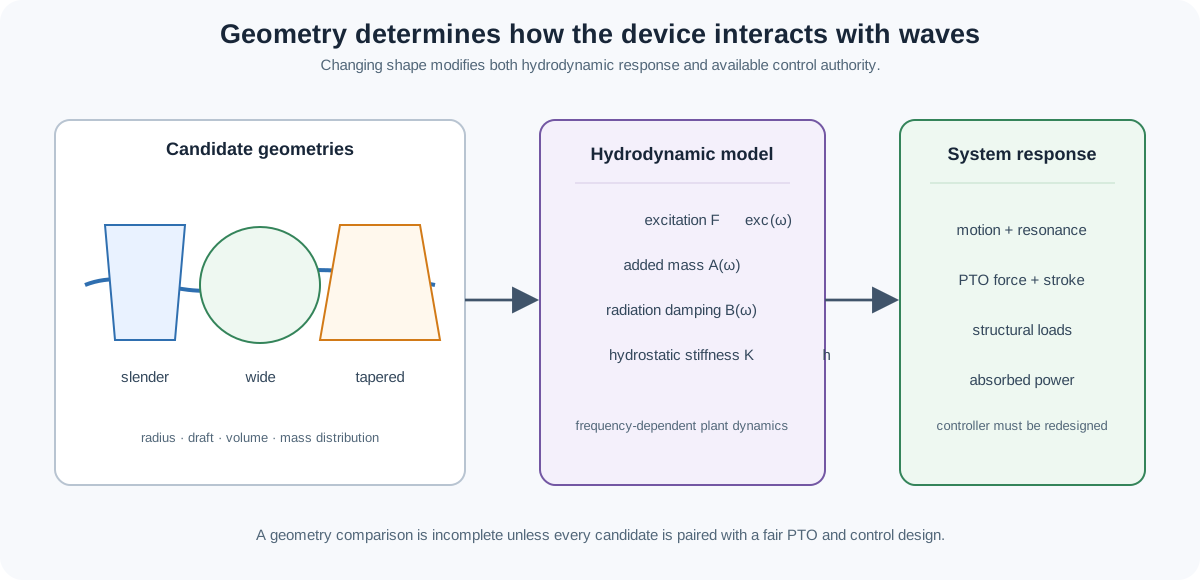
Recommended workflow
characterize site.
model conversion chain.
co-design device and control.
integrate storage.
validate lab to sea.
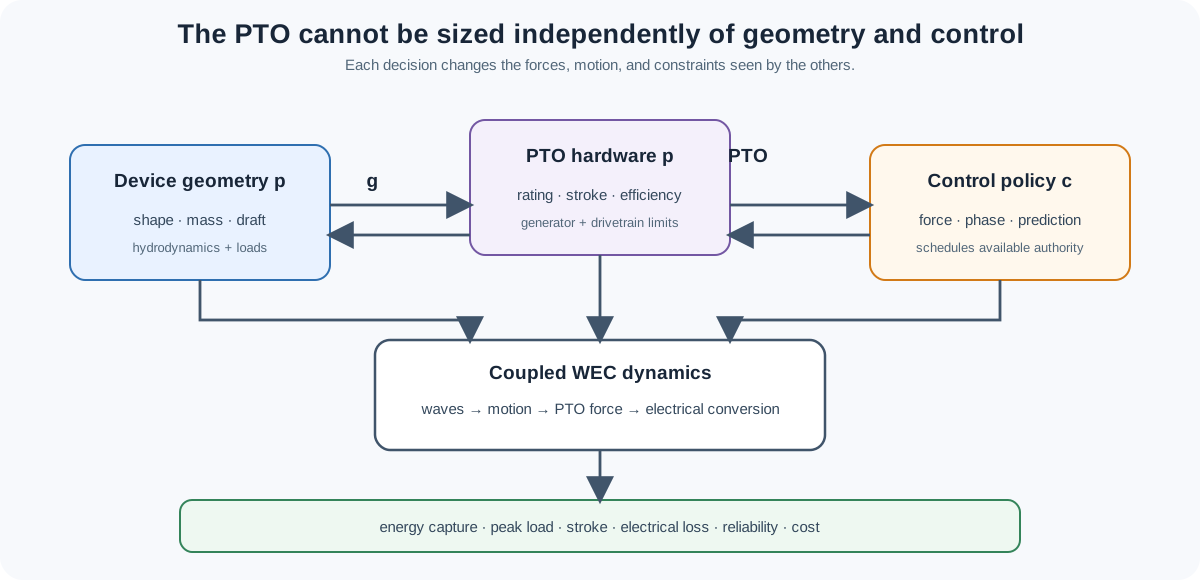
Chapter map
Wave and Hydrokinetic Energy Fundamentals
Device Geometry and Hydrodynamics
Power-Take-Off Design
Generator and Drivetrain Design
Mooring and Structural Design
Reactive, Latching, and Model-Predictive Control
Geometry–PTO–Control Coupling
Array Layout and Site Selection
Wind–Wave Hybrid Systems
Storage, Electrolyzers, and Hydrogen Production
Economic and Reliability Considerations
Laboratory and Open-Water Validation