Chapter 14: Formulation Diagnostics and Practical CCD Workflow
How to make a CCD study trustworthy
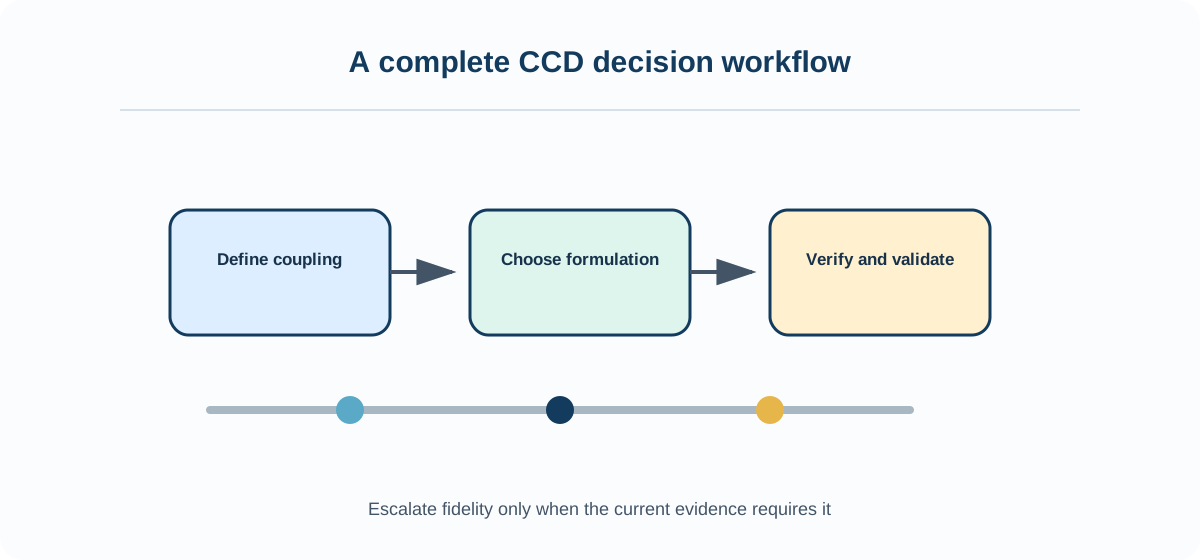
A trustworthy CCD study follows an auditable workflow from system objective and dependency mapping through verification, validation, fair baselines, and reproducible reporting. CCD is used only when coupling justifies its cost.
Learning objectives
After completing this chapter, you should be able to:
explain and apply CCD readiness;
explain and apply dependency and coupling;
explain and apply formulation repair;
explain and apply verification and validation;
formulate and verify the chapter methods on a poor suspension formulation repaired for scaling, redundancy, information, actuator limits, mesh, and initialization.
Mathematical lens
The recurring quantities are dependency map, coupling sensitivities, scaled residuals, mesh , violation , and objective :
Running example
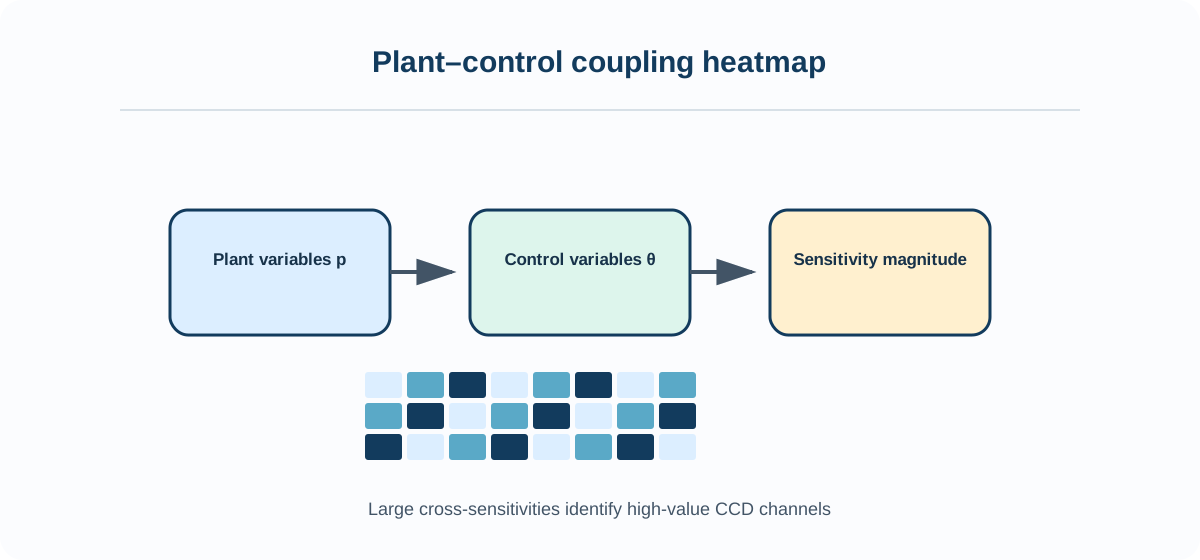
The recurring example is a poor suspension formulation repaired for scaling, redundancy, information, actuator limits, mesh, and initialization. Retaining one system prevents apparent improvements from being caused by changed physics, information, loads, or metrics.
Recommended workflow
define system objective.
map decisions.
test coupling.
verify numerics.
validate and benchmark.
Chapter map
Deciding Whether a Problem Needs CCD
Identifying Plant–Control Coupling
Sensitivity-Based Coupling Metrics
Selecting Design Variables
Choosing Objectives and Constraints
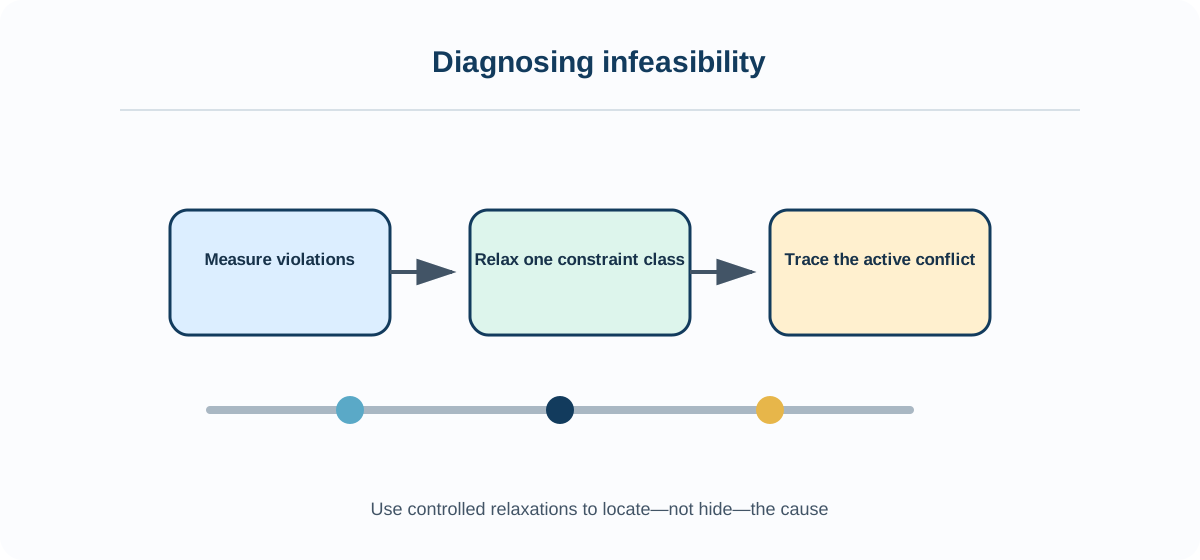
Feasibility Analysis
Constraint Relaxation
Numerical Verification
Model Validation
Benchmarking Against Sequential Design
Reporting Computational Effort
Reproducibility Standards