Chapter 7: Closed-Loop CCD and Information Availability
Designing systems that can actually be implemented
Closed-loop CCD treats sensing, estimation, prediction, sampling, computation, and controller structure as design resources. Information availability can change both achievable performance and the preferred physical plant.
Learning objectives
After completing this chapter, you should be able to:
explain and apply physical plant;
explain and apply sensors;
explain and apply state estimator;
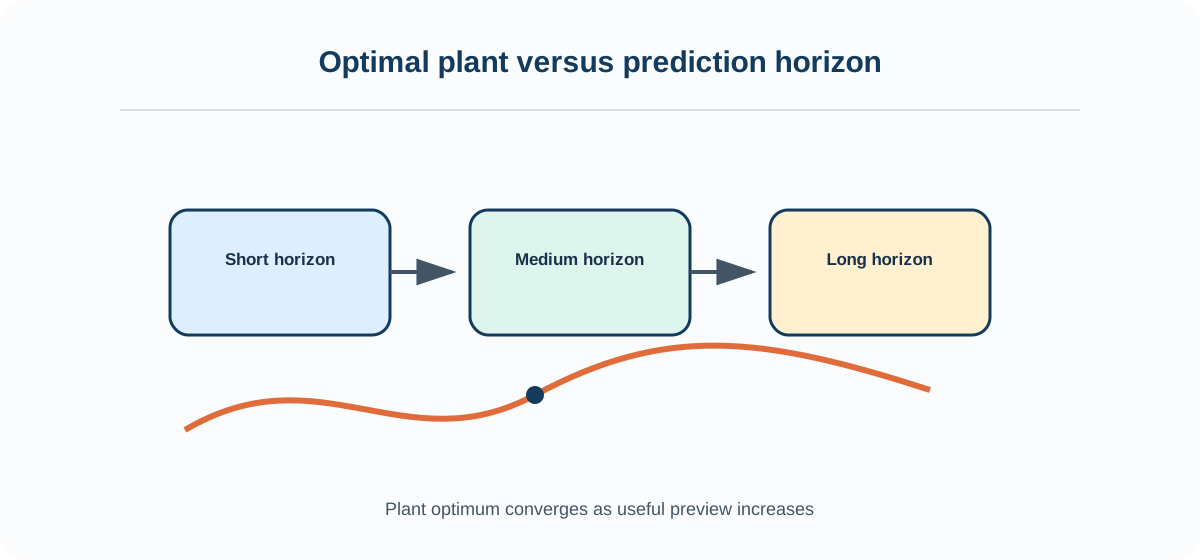
explain and apply prediction horizon;
formulate and verify the chapter methods on an active suspension under full preview, finite-horizon MPC, reactive feedback, and noisy estimation.
Mathematical lens
The recurring quantities are , controller and estimator , information architecture , and :
Running example
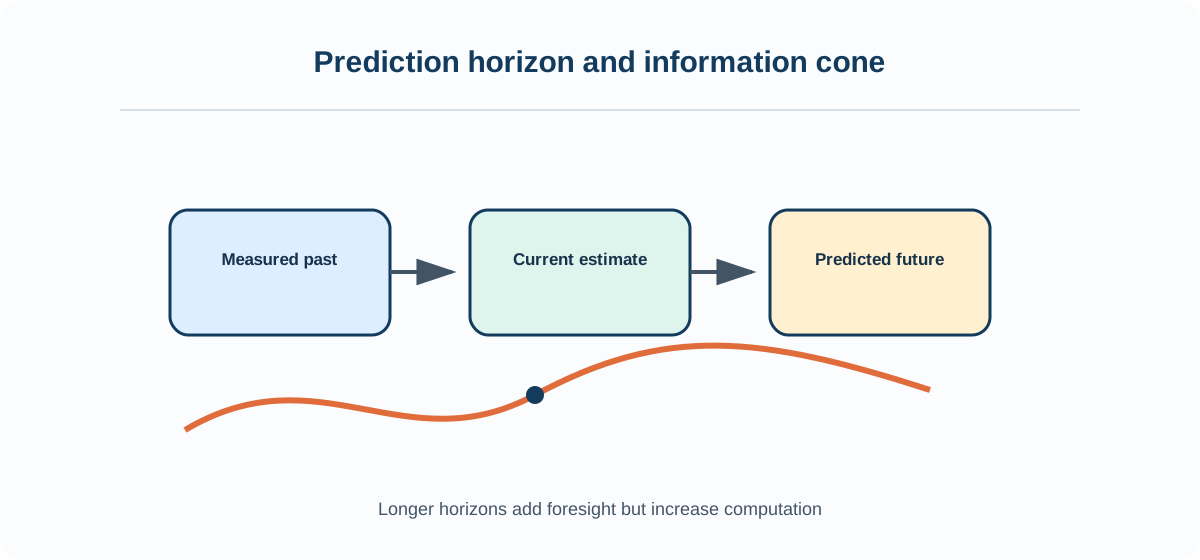
The recurring example is an active suspension under full preview, finite-horizon MPC, reactive feedback, and noisy estimation. Retaining one system prevents apparent improvements from being caused by changed physics, information, loads, or metrics.
Recommended workflow
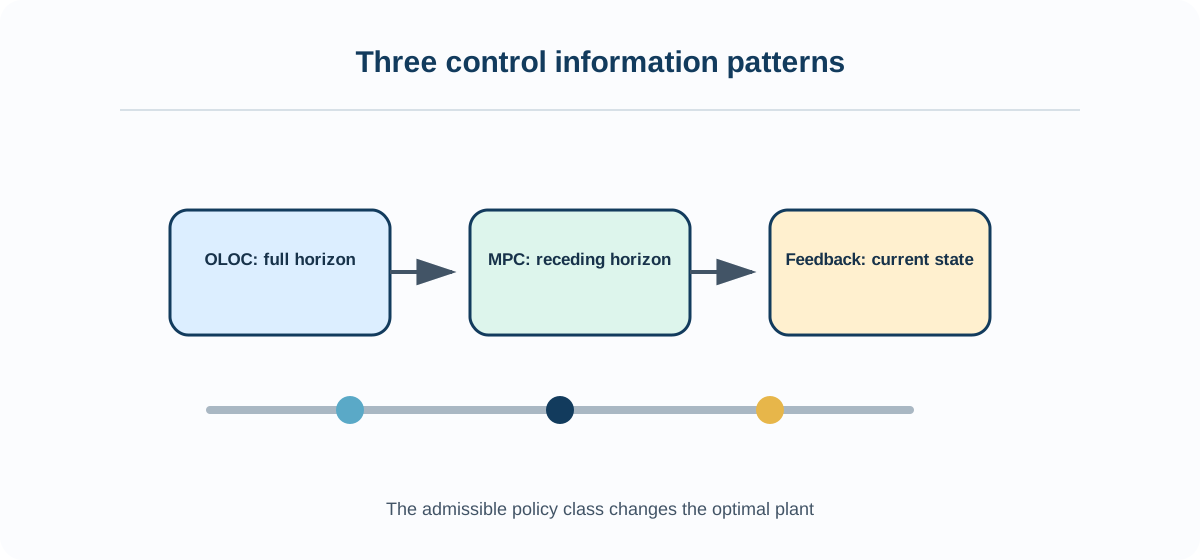
compute OLOC limit.
restrict information.
design estimator.
select controller.
validate real time.
Chapter map
Fixed-Structure Controller Co-Design
PID and State-Feedback CCD
LQR and Robust-Controller CCD
State Estimation and Kalman Filtering
Model Predictive Control
Preview and Prediction Horizons
Sampling, Computational Delay, and Model Fidelity
Controller Architecture Enumeration
Bridging OLOC and Closed-Loop Control
A Staged Plant-and-Controller Development Process